Australian Conference on Rock Mechanics 2026
Keynote speakers: Prof. Seokwon Jeon and Prof. Leandro R. Alejano
The Australian Geomechanics Society (AGS), in collaboration with the International Society for Rock Mechanics and Rock Engineering (ISRM), proudly announces the Australian Conference on Rock Mechanics (ACRM), to be held in Melbourne from 21–24 July 2026.
This event will bring together leading experts, researchers, and industry practitioners to exchange knowledge, foster collaboration, and showcase the latest advancements in rock mechanics and rock engineering. ACRM is set to become a key national platform for professional networking, engagement with early-career professionals, and strengthening Australia’s contribution to the global rock mechanics community.
Optional Pre-Conference Workshops
We will be hosting optional workshops at the conference venue on Tuesday 21 July 2026:
Deformation-based Support Design and Rockburst Hazard Assessment
Tuesday 21 July 2026, 9:30 am – 5:30 pm
Dr Peter Kaiser (Canada), Dr Dmitriy Malovichko (Russia), and Dr Alex Rigby (Australia).
Rock Mass Classification Workshop
Tuesday 21 July 2026, 9:30 am – 13:00 pm
Prof. Seokwon Jeon (Korea) and Prof. Leandro R. Alejano (Spain).
Numerical Modelling Workshop
Tuesday 21 July 2026, 13:30 pm – 5:30 pm
Dr Sevda Dehkhoda, Dr. Kálmán Benedek, Dr David Beck, Dr Alison McQuillan, Dr Daisuke Fukuda, Dr Mojtaba Mohammadnejad, and Dr Farzin Hamidi
Technical sessions
Conference Theme “Advances in Science and Emerging Technologies in Rock Engineering”
The Conference aims to explore what is being researched and what is being built at the frontiers of rock engineering. Within this overarching theme, papers and presentations are invited in several areas:
- Civil engineering – transport, water, pumped hydro
- Geohazards – rock slope engineering & risk assessment, (disaster prevention)
- Mining – high stress environments, deep mining challenges, and sustainable mining practices
- Advanced computational and data-driven methods
- Advances in Rock Mass Characterisation, Classification and Strength Criteria
- Data collection, laboratory and in-situ testing
Keynote Speakers

Prof. Seokwon Jeon ISRM President; Seoul National University, South Korea
Rock Fragmentation: Theories and Applications
Seokwon Jeon is a Professor at Seoul National University, Seoul, Republic of Korea. He received his B.S. and M.S. degrees in Mineral and Petroleum Engineering from Seoul National University in 1987 and 1989, respectively, and his Ph.D. in Mining and Geological Engineering from the University of Arizona in 1996. Since joining the Department of Energy Resources Engineering at Seoul National University in 1997, he has been leading the Rock Mechanics and Rock Engineering Laboratory. He has authored or co-authored more than 150 peer-reviewed papers and delivered over 250 technical presentations at national and international conferences. He has supervised 24 Ph.D. students and more than 38 Master’s students. His research interests include rock fragmentation, rock fracture mechanics, tunneling engineering, surface subsidence, and radioactive waste disposal. He is a member of National Academy of Engineering of Korea. He has served in various leading roles, including President of the Korean Society for Rock Mechanics and Rock Engineering and President of the Korean Society of Mineral and Energy Resources Engineers. Within the International Society for Rock Mechanics and Rock Engineering (ISRM), he has served as a member of the Commission on Testing Methods and the Commission on Design Methodology. He also served as ISRM Vice-President for Asia (2015-2019) and currently serves as ISRM President for the office term 2023-2027. He has been a strong advocate of educational initiatives and cooperation with industry throughout his career.

Prof. Leandro R. Alejano University of Vigo, Spain
Towards a conceptual model of rock mass post-failure behaviour (rock masses are broken rock)
Prof. Leandro R. Alejano is a Professor of Rock Mechanics at the University of Vigo, Spain, where he has been an academic staff member since 1995 and became a full professor in 2020. His research focuses on rock engineering and its applications in mining and construction, including rock post-failure behaviour, dilatancy, tunnelling, subsidence, and underground excavations. His recent work examines rock slope engineering, particularly the stability of large granitic boulders, rockfall hazard management in quarries and mountain areas, and complex rock slope failures. A regular consultant for mining companies in Spain, he has published around 100 journal papers and over 100 conference papers. He currently serves as President of the Spanish Group of the ISRM, was VP Europe of the ISRM (2019–2023), and was Associate Editor of IJRM&MS (2013–2018).
Invited Speakers

Dr Samintha Perera University of Melbourne; Australian Research Council Future Fellow
Geomechanical Response of Depleted Gas Reservoirs on the Underground Hydrogen Storage Process
Dr Samintha Perera is an Australian Research Council Future Fellow, working as a senior lecturer at the University of Melbourne. Her major research focuses on rock-fluid interactions in deep underground reservoirs during various gas storage and extraction processes (e.g. CO2, H2, CH4). Her research led her to win some major nationally and internationally competitive awards, including the Dorothy Hill Medal from the Australian Academy of Science in 2022, the ROCHA Medal from ISRM in 2014, and the Philip Law Medal from the Royal Society of Victoria in 2016. She has been featured among the”top 2% scientists in the world in the Energy field” in the Stanford University Review in 2020-2025, Engineers Australia’s “Create” Magazine in 2022 and Royal Institution of Australia’s “COSMOS” science magazine in 2024. She serves as an Executive Editor for the Journal of Gas Science and Engineering, Associate Editor for the International Journal of Rock Mechanics and Mining Sciences, and editor for Minerals, G4, and Deep Resources Engineering. She contributes to developing/modifying Australian Standards for soil and rock testing as a member of the Standards Australia Soil and Rock Testing Committee (CE-009).

Prof. Olivier Buzzi University of Newcastle
A stochastic approach for the prediction of large discontinuity shear strength
Dr. Olivier Buzzi was admitted at the Ecole Normale Superieure (ENS) de Cachan in 1997 and obtained the French National Agrégation of Civil Engineering in 2000. He completed a Master on rock joints (in 2001) and PhD on the hydromechanical behaviour of contacts between geomaterials in the context of nuclear waste storage (completed in 2004) at the University Joseph Fourier, Grenoble.
Moving to Australia in 2005 to take up a post-doctoral position was the first step in Olivier’s career at the University of Newcastle. He began lecturing at the University in 2007, became senior lecturer in 2009, Associate Professor in 2012 and full Professor in 2018.
Olivier’s research interests span from rock mechanics (hydromechanical response of rock joints, rockfall) to soil mechanics (expansive soils, unsaturated soil mechanics, soil microstructure). With a long history of successful industry collaboration and a taste for challenging problems, Olivier combines experimental, theoretical and numerical approaches to propose innovative solutions to complex problems.
Olivier served on the Editorial board of Computers and Geotechnics and Rock Mechanics and Rock Engineering, as an Associate Editor of Canadian Geotechnical Journal and of Rock Mechanics and Rock Engineering.

Dr Sevda Dehkhoda Beck Engineering
Simulating the Unseen in Rock Mechanics
Dr. Sevda Dehkhoda is a Principal Mining and Rock Mechanics Engineer with 20 years of experience in R&D and technical consulting for the global mining and civil industries. She develops advanced frameworks to identify the mechanisms, parameters, and processes that govern the technical and economic outcomes of mining operations. Her current work focuses on using advanced multiphysics numerical simulations to manage complex geotechnical hazards and risks in high-stress, high-deformation, and deep mining environments.
Sevda is committed to translating scientific insights into practical solutions that improve safety, reliability, and environmental performance in resource industry. Her research on selective mining and alternative rock fracturing methods has advanced both practice and technology, earning her the ISRM Rocha Medal Certificate (2014) and the ARMA Future Leader Award (2019). She has also been selected as the 2025 Henry Krumb Lecturer by the Society for Mining, Metallurgy & Exploration (SME) for outstanding technical contributions.
Sevda served as ISRM Vice President for Australasia (2019–2023) and currently sits on the ISRM Advisory Board and the Editorial Board of the International Journal of Rock Mechanics and Mining Sciences.

Prof. Murat Karakus University of Adelaide
From Post-Peak to Rockburst: Advancing Risk Assessment in Deep Mines
Dr. Murat Karakus holds a BSc in Mining Engineering (1991) from Hacettepe University, Turkey, and a PhD in Mining and Minerals Engineering (2000) from the University of Leeds, UK. He is based at the School of Chemical Engineering, University of Adelaide, where he established the Cave Mining Research Centre. His research focuses on the challenges of cave mining, including rockbursts, mud rushes, and rock support in high-temperature rock masses.
He is a Chief Investigator in major research and industry projects, including the ARC Hub on NextGenMin, the ARC Training Centre on sustainable ore extraction technologies using composite materials and smart mining systems with machine learning. In 2023, he was recognised as Australia’s leading researcher in Mining and Mineral Resources. He leads a multidisciplinary research group of academics, postdoctoral fellows, and PhD students, collaborating with the Australian Institute of Machine Learning and leading engineering institutes.
Dr. Karakus has authored over 200 peer-reviewed publications and is internationally recognised for his contributions to mining geomechanics. He serves on the ISRM Commissions on Rockburst and Deep Mining, the International Committee for Mine Safety Science and Engineering, and is Associate Editor of the International Journal of Rock Mechanics and Mining Sciences, and Rock Mechanics and Rock Engineering.
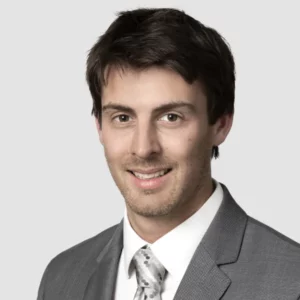
Ben Chapman Snowy Hydro Limited
Engineering Snowy 2.0 – A reflection on the geotechnical and tunnelling journey so far
Ben Chapman is a Civil Engineer specialising in tunnel and geotechnical engineering. He holds a Bachelor of Engineering (Civil) from the University of Western Sydney and a Master of Engineering Science in Geotechnical Engineering and Engineering Geology from the University of New South Wales.
Since graduating, Ben has been an integral part of SMEC Australia’s tunnel group, where he has been involved in the planning, design, and construction of a range of complex public infrastructure projects across Australia as well as internationally in Malaysia and Papua New Guinea.
Most recently, for the past eight-years, Ben has been seconded to Snowy Hydro Limited, where he is the Tunnels and Geotechnics Discipline Lead for the Snowy 2.0 Owner’s team. Snowy 2.0 is one of the largest renewable projects in the world and the next generation of the iconic Snowy Mountains Hydroelectric Scheme.
During the early Snowy 2.0 phases, Ben had a key involvement in the development of the feasibility study, reference design and contract documentation. During the delivery phase, he has led the development and implementation of the Geotechnical Baseline Report (GBR) and provided technical oversight through the detailed design development, review and ongoing construction implementation. Notably, Ben has had a key involvement in the management of the project’s geotechnical and tunnelling risk, and the implementation of the observational geotechnical approach for project’s extensive underground structures, such as the large Power Station Complex. He also served as the Owner’s lead for the procurement, design, manufacture and operation of the Project’s four Tunnel Boring Machines (TBMs).
Optional Post-Conference Field Trips
Post-conference field trips, led by experienced practitioners, have been organised for you to consider attending at additional expense on Friday 24 July 2026.
Stawell Underground Physics Laboratory Site Tour
Friday 24 July 2026, 7:30 am – 6:00 pm
Great Ocean Road & Scotchmans Hill Field Trip
Friday 24 July 2026, 7:30 am – 6:00 pm
Awards and Recognition
- Best Paper Award – Awarded to the most impactful and high-quality paper presented at the conference.
- Best Presentation Award – Awarded to the most engaging and well-delivered presentation during the conference.
Sponsorship Opportunities
Sponsorship opportunities for the conference are now available. Details can be found in the sponsorship flyer. For more information, please contact [email protected]
Sponsorship can be purchased directly through the website.
Accommodation
Accommodation must be booked separately through the Park Hyatt Hotel. Accomodation is limited but a conference rate of $350 for room and breakfast is being offered for attendees.
To take advantage of this rate, book via this link: https://www.hyatt.com/events/en-US/group-booking/MELPH/G-AGS5
Organising Committee
- Qianbing Zhang (Monash University)
- Davide Guccione (University of Newcastle)
- Ha Bui (Monash University)
- Stephen Barrett (PureService)
- Robert Bertuzzi (PSM)
- Anna Giacomini (University of Newcastle)
- Sevda Dehkhoda (Beck Engineering)
Registration
Members are required to log in to access the AGS member price, which is not transferable.
More information about logging in to this website can be found here.
Payment via credit card is available and processed by Stripe. The Australian Geomechanics Society will not store or have access to your credit card information, and Stripe adhere to strict security and PCI compliance for processing online transactions.
Upon purchase, an email and a tax invoice will be sent to the buyer. Attendees will also receive an email with their tickets attached, as well as a link to download the tickets if they are misplaced.
Tickets to the conference include a ticket to the conference dinner. You can buy additional conference dinner tickets for people not attending the conference or day-rate ticket holders.
Please note, the field trip and walking tour are intended for conference attendees. The organisers reserve the right to refund purchases made by non-attendees.
AGS Members
Login to access member pricing
Login to access member pricing
Login to access member pricing
ISRM Overseas Members
You will be required to provide information about your ISRM membership during the checkout process. We reserve the right to validate membership and charge the full-price where membership is not current.
Non-Members
Additional tickets to the conference dinner
For purchasers of the day rate, or those who wish to purchase a “plus one” ticket to the dinner.
One-Day Delegate rates
One-Day Delegate rate tickets will only be made available for sale after 1st July 2026.
These tickets for either Wednesday or Thursday attendance will be $545 for AGS and ISRM Overseas Members and $645 for non-members. One-Day Delegate tickets for either day do not include attendance at the Conference Dinner. You will need to buy an “extra ticket” to attend as a One-Day Delegate.
Engineers Australia members participating in AGS technical sessions can record attendance on their personal CPD logs. Members should refer to Engineers Australia CPD policy for details on CPD types, requirements and auditing guidelines.