Deformation-based Support Design and Rockburst Hazard Assessment Course
Optional pre-ACRM Workshop
Dr. Peter K Kaiser and Dr. Alex Rigby
This course focuses on support design for excavations in brittle rock, where displacements induced by sudden or gradual (squeezing) stress fracturing may consume much of the support’s capacity rendering the support systems vulnerable to rockburst loading. It deals with the functionality of the support in violently deforming ground and with the consequences of mining-induced support damage. It offers quantitative means to estimate the capacity of integrated support systems and a systematic approach to compare it with the static and dynamic demands imposed on the ground support. Because gradual and sudden stress fracturing not only loads the support, but also deforms it, part of its load and energy-dissipation capacity is gradually consumed, leaving less and less remnant capacity at the time when the support is needed to mitigate rockburst damage. If the support capacity can be consumed by deformation, it can also be restored by preventive support maintenance (PSM), a cost-effective approach to minimize delays and manage ground control costs. This concept for ground control is introduced and supported with operational evidence. Accounting for capacity consumption and integrating PSM into the mine development and operation schedule provides means for prudent asset management and opportunities for cost optimisation.
Sudden stress fracturing of excavation walls emits seismic waves that can be used to identify the depth of strainbursting and the duration of the related rock mass bulking process. This provides essential quantitative input for support design and hazard assessment in strainburst-prone ground. The rockburst hazard in strainbursting ground depends on the stress level (stress at mining stages and strength in geological domains), the amount and rate of sudden stress fracturing, intensity of ground motion, and consumed support capacity (co-seismic and mining-induced strain). These and other factors are used to establish the current and to forecast the anticipated rockburst hazards as well as to assess the effectiveness of ground control measures and mine sequencing. Contrary to earlier versions, this course will focus, supported by case examples, on the application of now well-established deformation-based support design (DBSD) and rockburst hazard assessment (RBHA) principles.
In summary, the course presents an integrated approach of deformation-based support design using support demand and support capacity-assessment tools, and an innovative approach for rockburst hazard assessment using geological, stress, mining sequence, ground support and seismic data.
Preliminary programme
1. Basic principles of Deformation-Based Support Design (DBSD) and Rockburst Hazard Assessment (RBHA)
- Introduction to RBHA methodology and tool
- Principles of DBSD and support damage potential assessment:
- Rockburst demand from crush (SB) and slip seismic events (SD) – overview of strainburst and shakedown processes
- Overview of DBSD principles – deformation-based support capacity consumption
- Utilizing pre-burst conditions for model calibration and strainburst potential and severity forecasting (based on stress, geometry and geology)
- Utility of RBHA for support design (override functionality) and assessment of effectiveness of support systems using the displacement safety margin concept
- Utilizing of seismic data to assess damage severity and support consumption: evaluation of strainbursting depth and duration of bulking, probability and percentage of the dynamic realisation of extreme depth of failure, increase in the depth of failure and consumption of ground support capacity
2. Integrated ground control and hazard assessment for planning and operational purposes
- Utility of RBHA for hazard forecasting for short-term planned mining
- Utility of RBHA for hazard forecasting for long-term planned mining
- Application of RBHA for forensic analysis of damaging events
About the presenters
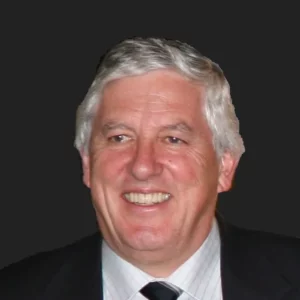
Dr. Peter K Kaiser Professor Emeritus, Bharti School of Engineering, Laurentian University, Sudbury, Canada; President, GeoK Inc., Sudbury
Peter Kaiser holds degrees from the Federal Institute of Technology in Zurich and the University of Alberta, Canada. From 1987 to 2015, he served as Chair for Rock Engineering and Ground Control at the Bharti School of Engineering, Laurentian University, and held director positions at the Centre for Excellence in Mining Innovation (CEMI) and the Rio Tinto Centre for Underground Mine Construction (RTC-UMC).
Dr. Kaiser is recognized for his expertise in applied research related to underground construction and mining, bringing substantial consulting experience from working with numerous firms, mining operations, and governmental organizations. His consultancy work has supported contractors, mining companies, and public sector clients in claims and litigation proceedings across four continents.
He has authored over 400 technical and scientific publications in geomechanics and has received multiple honors, including Fellowship status with both the Engineering Institute of Canada (EIC) and the Canadian Academy of Engineers. Dr. Kaiser was awarded the Julian C. Smith Medal by the EIC for his “Achievements in the Development of Canada” and delivered the ISRM Mueller Award lecture titled “From Common to Best Practices in Underground Rock Engineering.”
Currently, his research and development efforts concentrate on “Deformation-based Support Design” (DBSD) for applications in mining and tunneling. Collaborating with the Institute of Mine Seismology (IMS) in Australia, Dr. Kaiser has advanced DBSD methodologies for support design in burst-prone environments and for rockburst hazard assessment (RBHA). The RBHA tool is now utilized in more than a dozen mines across Australia, Canada, South Africa, South America, and Europe.

Dr. Alex Rigby Senior seismologist, Institute of Mine Seismology
He studied Physics and Engineering at the University of Tasmania, receiving his PhD in 2021. He joined IMS in 2020, where he is responsible for the development of numerical and statistical modelling methodologies and tools, with a focus on its integration with seismic data. He is also involved in research into seismic sources, particularly the dynamics of crush-type sources associated with failure near excavations.
Registration
Members are required to log in to access the AGS member price, which is not transferable.
More information about logging in to this website can be found here.
Payment via credit card is available and processed by Stripe. The Australian Geomechanics Society will not store or have access to your credit card information, and Stripe adhere to strict security and PCI compliance for processing online transactions.
Upon purchase, an email and a tax invoice will be sent to the buyer. Attendees will also receive an email with their tickets attached, as well as a link to download the tickets if they are misplaced.
Information about discounts and refunds can be found here.
Engineers Australia members participating in AGS technical sessions can record attendance on their personal CPD logs. Members should refer to Engineers Australia CPD policy for details on CPD types, requirements and auditing guidelines.