Numerical Modelling Workshop
Optional pre-ACRM Workshop
The Numerical Modelling Workshop is part of the pre-conference program for the 2026 Australian Conference on Rock Mechanics (ACRM2026).
This session brings together leading experts in geomechanics, hydromechanical modelling, and rock engineering from industry and academia to explore advanced modelling techniques and their implementation in practical engineering projects. Through case studies and applied examples, participants will gain insights into model selection, calibration, and decision-making based simulation results.
Workshop Agenda
| Timeline | Activity | Presenter |
|---|---|---|
| 12:30-13:30 | Workshop Registration | |
| 13:00-13:30 | Lunch | |
| 13:30-13:40 | Opening and Introduction | Chair |
| 13:40-14:10 | Challenges at the Interface of Geomechanics and Hydrogeology | Kálmán Benedek, Itasca |
| 14:10-14:40 | High-Performance Numerical Modelling of Fluid-Solid Interactions in Rock Engineering | Daisuke Fukuda, Hokkaido University |
| 14:40-15:10 | The Scale Problem in Coupled Hydro-Mechanical Mining Simulation | David Beck, Beck Engineering |
| 15:10-15:30 | Coffee break | |
| 15:30-16:00 | Simplification of complex ground conditions for strategic stability analysis | Murat Karakus, University of Adelaide |
| 16:00-16:30 | From Geological Model to Stability Analysis: Seequent’s Integrated Approach to Rock Mechanics | Farzin Hamidi, Seequent |
| 16:30-17:00 | Advancing FDEM Modelling of Rock Fracture and Fragmentation: Calibration, Sensitivity, and Engineering Application | Mojtaba Mohammadnejad, GHD |
| 17:00-17:30 | Discussion and Close-out | All |
About the presenters

Dr Sevda Dehkhoda Beck Engineering
Workshop Chair
Biography
Dr. Sevda Dehkhoda is a Principal Mining and Rock Mechanics Engineer with 20 years of experience in R&D and technical consulting for the global mining and civil industries. She develops advanced frameworks to identify the mechanisms, parameters, and processes that govern the technical and economic outcomes of mining operations. Her current work focuses on using advanced multiphysics numerical simulations to manage complex geotechnical hazards and risks in high-stress, high-deformation, and deep mining environments.
Sevda is committed to translating scientific insights into practical solutions that improve safety, reliability, and environmental performance in resource industry. Her research on selective mining and alternative rock fracturing methods has advanced both practice and technology, earning her the ISRM Rocha Medal Certificate (2014) and the ARMA Future Leader Award (2019). She has also been selected as the 2025 Henry Krumb Lecturer by the Society for Mining, Metallurgy & Exploration (SME) for outstanding technical contributions.
Sevda served as ISRM Vice President for Australasia (2019–2023) and currently sits on the ISRM Advisory Board and the Editorial Board of the International Journal of Rock Mechanics and Mining Sciences.
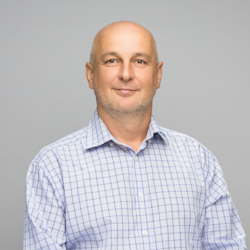
Dr. Kálmán Benedek Principal Hydrogeologist, Itasca
Challenges at the Interface of Geomechanics and Hydrogeology
In a typical mining project, hydrogeology functions as an information provider, delivering pore pressure assessments to support downstream geomechanical analyses. This simplified, one directional workflow is adequate for many contexts; however, more complex environments demand more integrated approaches. ITASCA’s recent studies have highlighted several parametric and non-parametric opportunities to enhance the two-way information exchange between these two critical disciplines.
Key challenges and the areas where further development is required include, but are not limited to: conceptual model formulation, discrepancies between purpose built models and reality, the need for fully or partially coupled hydro geomechanical solutions, uncertainty quantification, transfer and management, rainfall induced instabilities within the unsaturated zone, static versus time-dependent parameters, and the selection and application of analytical versus numerical modelling approaches.
Beyond these technical considerations, the presentation will also reflect on the inherent theoretical limitations present in all geoscientific studies, discussing these constraints from both a technical and a little bit of philosophical perspective.
Biography
Kálmán has extensive experience in the characterisation of diverse hydrogeological settings. He has completed numerous investigations for mining projects, including aquifer conceptualisation, mine dewatering, rock block stability assessments, DFN based geomechanical and well test simulations, tailings design and stability, monitoring programs, in situ hydraulic testing, groundwater pore pressure and seepage assessments, TSF and mine closure studies, and the evaluation of conceptual designs to support informed operational decision making. Beyond mining, he has contributed to oil and gas, nuclear and major infrastructure projects, with his expertise applied across Europe, North America, South America, the Asia–Pacific region, and Africa.

Dr David Beck General Manager, Beck Engineering
The Scale Problem in Coupled Hydro-Mechanical Mining Simulation
Coupled hydro-mechanical models are used to assess deformation, stability, and water-related risk in mining. In practice, many simulations over-simplify the environment by averaging rock mass properties, smoothing geological variability, and transferring results from coarse, steady-state stress or flow models into a coupled analysis. Such simplifications reduce the influence of defects and material variability that govern hydraulic and mechanical response, and commonly bias results toward an effectively over-drained condition. As a consequence, hazard mechanisms involving localised flow, damage accumulation, dilation, and water pressurisation of disturbed rock masses may be under-represented.
This presentation discusses the level of information, resolution, and physical representation required for coupled simulations to be considered fit for purpose for safety-critical and design decisions. It proposes that model detail should be commensurate with the scale, complexity, and consequences of the engineering question being addressed. When these conditions are satisfied, simulated deformation can be directly related to observed instability and damage, providing a transparent and defensible basis for hazard assessment, control selection, and safety-case justification over the life of a mining project.
Biography
Dr Beck received his BE (Hons.) Mining and PhD in Rock Mechanics from The University of Queensland. David worked for Mount Isa Mines, before becoming a consultant specialising in deep and high stress mining and simulation of complex rock mechanics problems. David is currently General Manager of Beck Engineering Pty Ltd, which is a rock mechanics and mining engineering consultancy specialising in simulation aided engineering and design.

Prof. Murat Karakus University of Adelaide
Numerical Modelling of Progressive Rock Failure Across Multiple Scales
Rock failure evolves from damage accumulation to fracture propagation and fragmentation across multiple spatial scales. This workshop presents recent advances in mechanics-based numerical modelling for simulating multiple failure processes. Three complementary modelling approaches will be discussed. The first incorporates fracture energy into constitutive models to reproduce post-peak behaviour and capture the initiation of rockburst. The second introduces a cohesive-to-frictional constitutive model implemented in 3DEC to simulate the transition from intact rock to discontinuous blocky behaviour. The third focuses on cave flow modelling, linking primary fragmentation with secondary fragmentation to improve predictions of material flow and fragmentation in caving operations. Together, these approaches provide a unified framework for modelling progressive rock failure in rock engineering.
Biography
Dr. Murat Karakus holds a BSc in Mining Engineering from Hacettepe University, Turkey, and a PhD in Mining and Minerals Engineering from the University of Leeds, UK. He is based at the School of Chemical Engineering, Adelaide University, where he established the Cave Mining Research Centre. His research focuses on cave mining challenges, including rockbursts, mud rushes, rock support, and high-temperature rock masses. He is a Chief Investigator in major ARC and industry projects on NextGenMin, sustainable ore extraction, composite materials, and smart mining systems. He has published over 200 papers and is internationally recognised in mining geomechanics. He serves on the ISRM Commissions on Rockburst and Deep Mining, the International Committee for Mine Safety Science and Engineering, and is Associate Editor of the International Journal of Rock Mechanics and Mining Sciences, and Rock Mechanics and Rock Engineering.

Dr Daisuke Fukuda Associate Professor, Hokkaido University
High-Performance Numerical Modeling of Fluid-Solid Interactions in Rock Engineering: Integrating Complex Dynamic Rock Fracture and Fluid Dynamics
This talk presents an advanced computational framework designed for simulating complex multi-physical processes in rock mechanics. The developed platform integrates the Combined Finite-Discrete Element Method (FDEM) with Computational Fluid Dynamics (CFD), utilizing schemes such as the Constrained Interpolation Profile (CIP) method. To handle the sophisticated coupling of fluid flow and fracturing solids, the Immersed Boundary Method (IBM) is employed for robust Fluid-Solid Interaction (FSI) modelling. A key feature of this research is the implementation of a massive parallelization strategy using GPGPU (General-Purpose Computing on Graphics Processing Units), which significantly enhances computational efficiency. The performance and applicability of the proposed numerical model are demonstrated through simulations of rock blasting involving with explosive detonation as a representative example. By bridging the gap between high-fidelity physical modelling and high-performance computing, this framework provides a powerful tool for analysing nonlinear deformation, fragmentation, and fluid-driven failures in rock engineering applications.
Biography
Daisuke is an Associate Professor at Hokkaido University, Japan. He received his Ph.D. in 2012, specializing in the controlled fracturing of rock-like materials by detonation and deflagration phenomena. His research interests focus on rock dynamics, blast engineering, and high-performance, high-fidelity numerical modelling. He is currently leading the development of three-dimensional complex dynamic rock fracture models and GPGPU-parallelized FDEM-based FSI simulators. His research has been recognized by several awards, including the Paper Award from the Japanese Society for Rock Mechanics (2020) and the Society of Materials Science, Japan (2021).
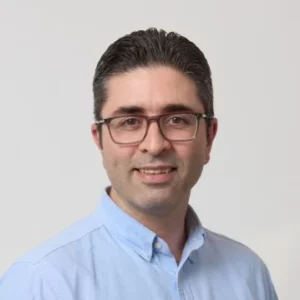
Dr Mojtaba Mohammadnejad Senior Tunnel Engineer, GHD
Advancing FDEM Modelling of Rock Fracture and Fragmentation: Calibration, Sensitivity, and Engineering Application
This presentation examines the calibration and application of the Finite–Discrete Element Method (FDEM) for simulation of rock cutting processes. Rock cutting involves complex fracture initiation, crack propagation, and fragmentation mechanisms governed by tool–rock interaction and in-situ stress conditions. FDEM provides a robust framework to capture the transition from continuum deformation to discontinuum behaviour, enabling explicit simulation of crack coalescence, chip formation, and block detachment.
Biography
Dr Mojtaba Mohammadnejad is a Chartered Geotechnical Engineer specialising in rock mechanics, tunnelling, and advanced numerical modelling. He completed his PhD at the University of Tasmania in collaboration with CSIRO, where he contributed to the development and application of FDEM techniques to investigate rock fracture and fragmentation processes. He has published peer-reviewed journal papers, presented at international conferences, and received research awards for his contributions. He currently works on major infrastructure and mining projects across Australia, integrating advanced numerical analysis with practical engineering design and assessment.
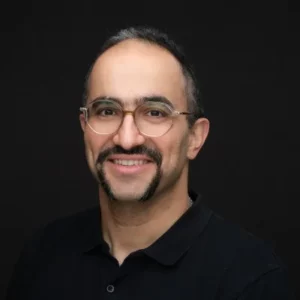
Dr Farzin Hamidi Senior Geotechnical Engineer, Seequent
From Geological Model to Stability Analysis: Seequent’s Integrated Approach to Rock Mechanics
This presentation focuses on the back-analysis of earthquake-induced slope failures, with an emphasis on integrating geological and geotechnical data within a unified modelling workflow. It demonstrates how implicit geological modelling can be used to define geological domains and geometry, followed by 3D limit equilibrium analysis to assess slope stability and failure mechanisms influenced by discontinuities and anisotropy. The study compares computed and observed landslide volumes to evaluate model performance and highlights the importance of high-quality field data in improving reliability. The results demonstrate the benefits of combining geological interpretation with geotechnical analysis to better understand failure processes and support robust engineering design.
Biography
Farzin is a Senior Geotechnical Engineer at Seequent with approximately 15 years of experience supporting underground and open‑pit mining, infrastructure, and energy projects. He holds a PhD in Geotechnical Engineering from the University of Queensland, with specialist expertise in rock mass characterisation, in‑situ stress measurement, and rock–fluid interaction. Farzin has delivered advanced numerical modelling and stability assessments for slopes, stopes, tunnels, dams, and tailings facilities using continuum and discontinuum methods. His professional experience includes major mining operations such as Dawson Mines, as well as complex infrastructure projects, where he focuses on translating rigorous rock mechanics theory into practical, risk‑based design and operational solutions.
Registration
Payment via credit card is available and processed by Stripe. The Australian Geomechanics Society will not store or have access to your credit card information, and Stripe adhere to strict security and PCI compliance for processing online transactions.
Upon purchase, an email and a tax invoice will be sent to the buyer. Attendees will also receive an email with their tickets attached, as well as a link to download the tickets if they are misplaced.
Information about discounts and refunds can be found here.
Engineers Australia members participating in AGS technical sessions can record attendance on their personal CPD logs. Members should refer to Engineers Australia CPD policy for details on CPD types, requirements and auditing guidelines.