Kiama slips rectification using Tensar® Geogrids
Road embankments at Kiama, a small coastal town just south ofWollongong, NSW, have been protected from repeated slips by ground stabilisation using geogrid reinforcement.
At an area known as Kiama Bends on the Princes Highway, previous road widening had caused instability in residual soils overlying relatively fresh, strong basalt. This instability had resulted in a number of slips over the past few years.
In 1990, the NSW Roads and Traffic Authority sought consultants’ advice to design remedial measures for the slip rectification work. At that stage two major slips, totalling about 150 m long occurred.
Initial designs called for metallic tie-back systems and the use of expensive imported rock fill. However, about one year after the release of these designs, a further slip occurred, joining the previous two, and now giving a total of 250 m with a maximum initial slope height of about 10 m.
Design
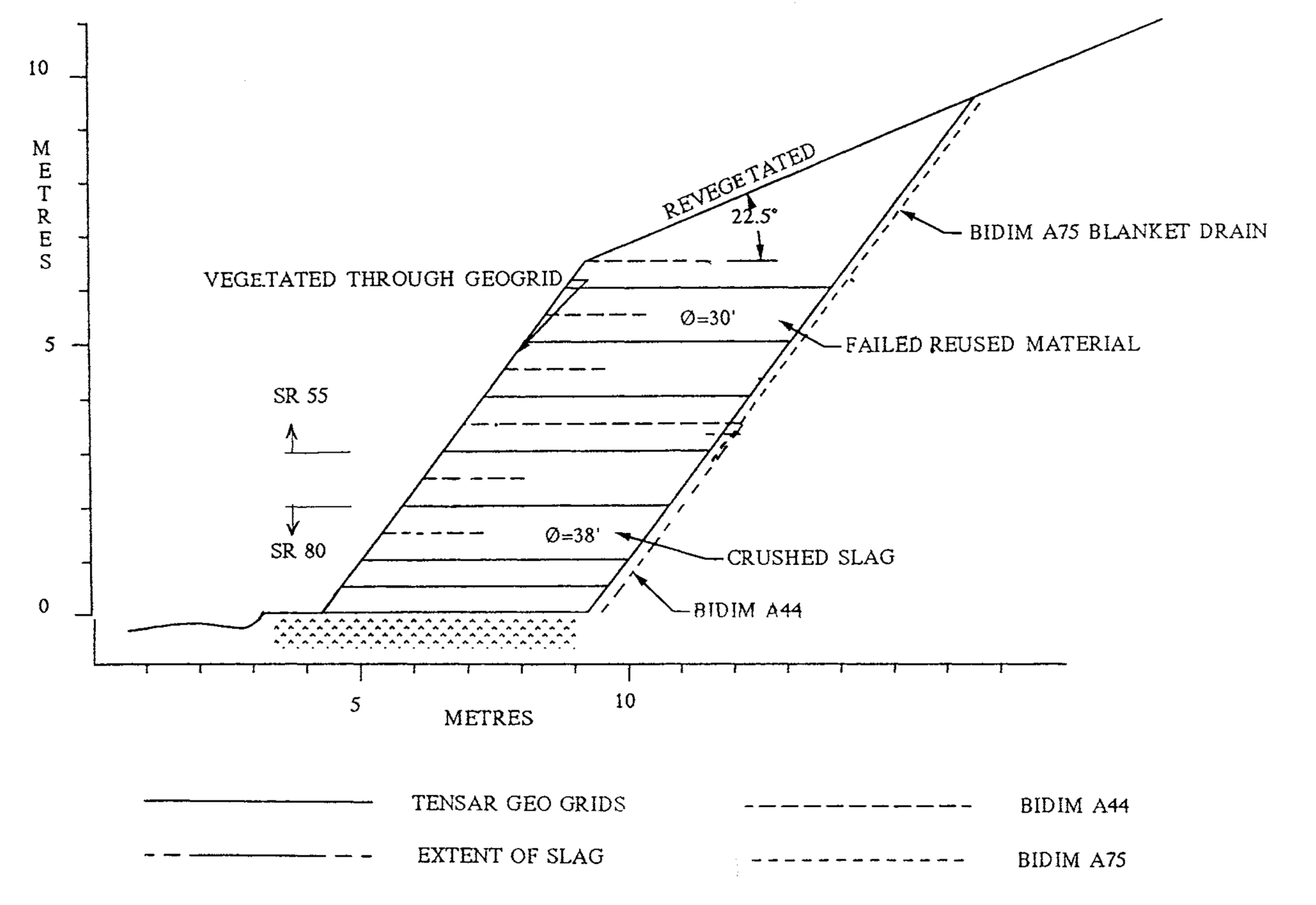
Construction was due to start in late 1991. The RTA asked Geofabrics Australasia to provide an alternative design using Tensar® Geogrids, which are an effective and economical geosynthetic reinforcement system with the distinct advantage of being non-corrodible, meaning they can be used with practically any soil type.
Geofabrics’ design suggestion to use the Tensar® option was accepted by the RTA, and giving them substantial cost savings over alternative systems.
Construction
Furthermore, if a portion of the local material had not already been removed from the site, necessitating import of some backfill material, the savings would have been higher.
Imported granular fill, consisting of clean, coarse basaltic material from local quarries was placed in the basal zone of the embankment, and finer crushed basalt was placed immediately against the grids to reduce potential damage.
By using a ‘leap-frog” method, whereby material excavated was reused almost immediately, stockpiling was kept to a minimum.
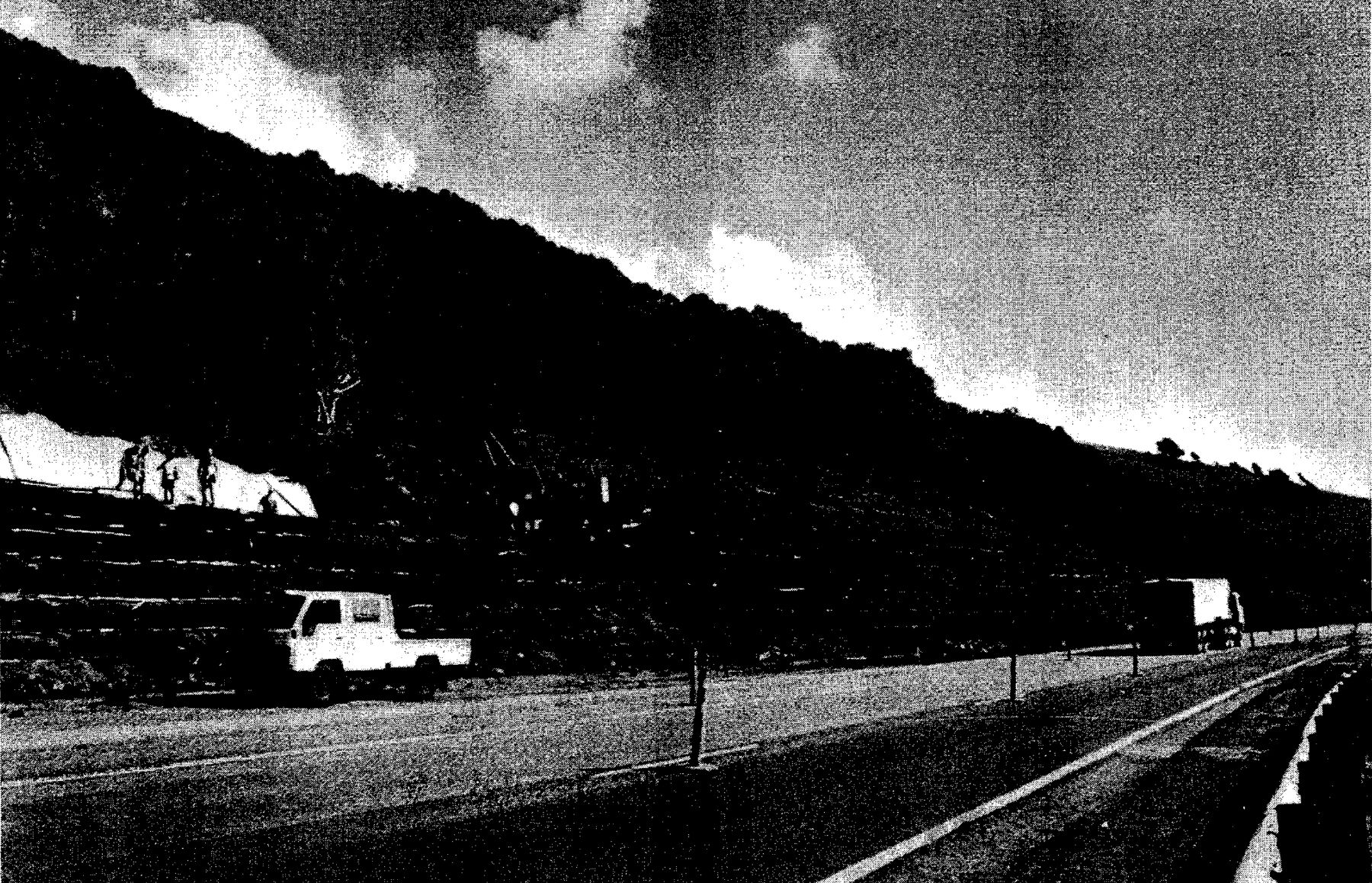
Construction was straightforward, with a minimum amount oflabour required. In fact, installation of the Tensar® geogrids SR80 and SR55 was undertaken by a crew of three.
Construction involved placing layers of Tensar® every 600 mm and wrapping the face to provide local face stability. Bidim® A44 geotextile was also used between the Tensar® layers to further increase stability of the face.
The Tensar® wrapped face has been planted with creeping plants and natural grass to blend in with the surrounding environment.