Geogrid use, Sunshine Motorway
The Sunshine Motorway Project in south-east Queensland has given engineers the opportunity to provide an innovative solution to age old problems of constructing major roadwork over soft soils. The motorway serves to provide quicker and safer access to the Sunshine Coast, north of Brisbane. Much of the motorway passes through cane fields and swamps on the Maroochy River flood plain.
Some of the route traverses very soft soils up to 10 metres in depth, with vane shear strength in the region of 6 to 10 kPa. The soils are very sensitive and have in-situ moisture as high as 150% of the liquid limit.
Considerable debate was generated between geotechnical engineers as to whether it was at all possible to construct six metre high embankments across such soft soils.
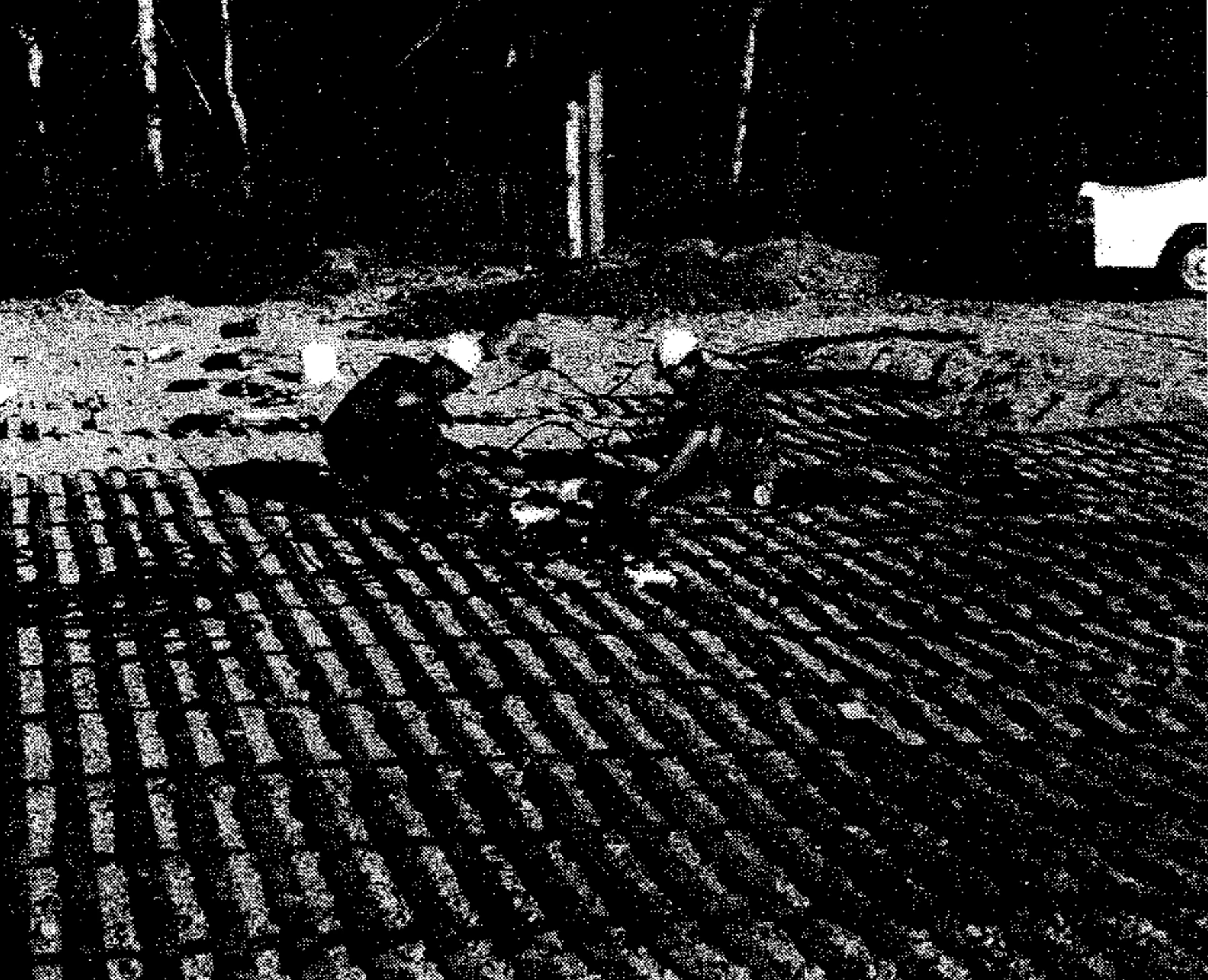
To investigate the possibilities, a trial embankment was constructed using a variety of treatments such as various berm widths, sub-soil wick drains as well as geogrid reinforcement in the base of the embankment. Subsequent to the trials the Sunshine Motorway Company called for supply of a 200 kN/m ultimate strength geogrid for embankment base reinforcement. The product chosen for use in the construction of the Motorway was Exxon ParaLink 200M and was supplied by the Geolab Group. ParaLink’s strength is provided by parallel sheathed polyester fibre straps. With the roll width being 4.5 m, the contractor reported that installation was easy and efficient.
Prior to the use of the ParaLink 200M for embankment reinforcement, a similar sheathed polyester fibre geogrid, ParaGrid 100/25S, was chosen for reinforcement beneath bridge abutments at the David Low Way roundabout. Geometry restrictions required the abutments to be battered at 1:1. Several layers of geogrid were installed within the batters to provide long term stability for the steep faces.
ParaGrid exceeded the design criteria with the use only of 2 layers whereas the originally specified product required 3 grid layers to achieve acceptable total reinforcement strengths for the nominated design life.
Geogrids are used in applications of soil instability. Generally geogrids are aligned in the direction of tensile strain in the soil. Deformations in the soil generated tensile forces in the reinforcement. The reinforcement tension then acts on the soil to improve stability by opposing the forces in the soil which cause failure.
ParaGrid 100/25S was chosen for supply to the Sunshine Motorway Project because of its unique engineering properties.
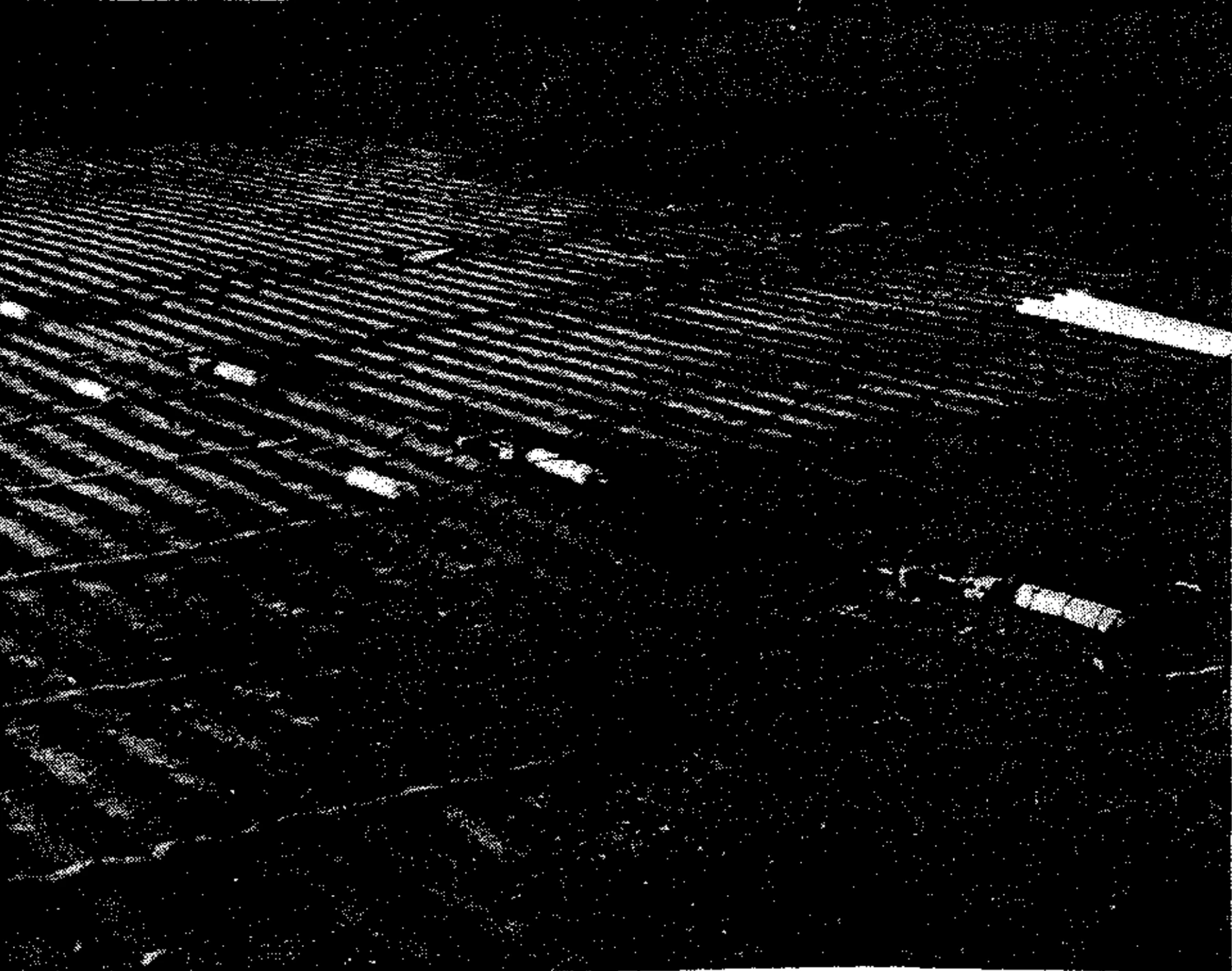
Some geogrids are formed by punching and drawing of polymer sheets, but, ParaGrid geogrids are formed by the cross laying of strips which are subsequently bonded during the manufacturing process at the cross-over points. ParaGrid consists of a core of high strength polyester fibres sheathed in polyethylene to protect the core during installation, The well known and recognised engineering properties of polyester make it the most suitable polymer for long term geogrid applications.
While ParaGrid is new to the Australian market, it and other polyethylene sheathed, polyester core products have been used in Europe for many years. It comes to Australia with a proven track record. Exxon Chemical Geopolymers Ltd, in the UK developed Parafil, a 1,000 tonne polyester fibre rope for use in the North Sea in 1960, and since then has developed a family of geogrid products. ParaGrid has bi-directional strength, and is available in a range of strengths from 30 kN/m to 100 kN/m in the main direction, and 15 kN/m to 100 kN/m in the secondary direction. ParaLink the “sister” product to ParaGrid has superior unidirectional strength from 100 kN/m to 1250 kN/m. Bidirectional strength can be obtained by laying mats at right angles to each other.
The Geolab Group have been appointed the sole distributor by Nylex Corporation to market and sell the Exxon geogrids (ParaGrid/ParaLink) Australia-wide and can be contacted in Brisbane, Cairns, Sydney, Melbourne, Adelaide and Perth. The company believes that these products offer cost, installation and performance advantages not previously available to designers and end users. Comprehensive product manuals are available to aid in the design process.
Ref: The Roadbuilder and Construction Equipment Journal – Oct. 1992.
By Permission: Mr C. Murphy, C.M.P.S. & F., Dr. P. Stocker, Golder Associates