Comparison of In-Situ and Laboratory Test-based Soil Liquefaction and Cyclic Softening Responses
Prof. Armin W. Stuedlein
The presentation describes a series of dynamic, in-situ tests conducted within natural soil deposits to deduce their seismic and post-seismic responses and presents a side-by-side comparison to the results of cyclic and post-cyclic laboratory test programs and/or laboratory test-based models to establish the similarities and differences between the two techniques. The deposits investigated included a low plasticity silt deposit at a mean depth of 2.5 m, a moderate to high plasticity silt deposit at a depth of approximately 10 m, and a medium dense sand deposit at a depth of about 25 m. Two methods for applying seismic loading in-situ were deployed: vibroseis shaking and controlled blasting. In-shaking responses considered include relationships between direct simple shear- (DSS-) equivalent shear strain and maximum and residual excess pore pressure, and cyclic resistance. Post-shaking responses in terms of settlements and post-shaking volumetric strains are compared to general and site-specific post-cyclic volumetric strain models for the medium dense sand and medium to high plasticity silt deposits, respectively. The post-shaking monotonic undrained shear strength of the medium to high plasticity silt deposit is compared to a site-specific post-cyclic strength model. Key issues surrounding the differences between laboratory and in-situ testing are identified and highlight relevant factors contributing to observed similarities and differences in the observations, including the use of reconstituted specimens, and the effects of multidirectional shaking, partial drainage, and excess pore pressure redistribution – effects which are difficult to simulate in the laboratory.
About the speaker
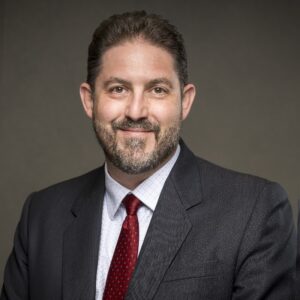
Prof. Armin W. Stuedlein Professor, Geotechnical Engineering School of Civil and Construction Engineering Oregon State University, USA
Prof. Armin W. Stuedlein is a licensed professional engineer and Professor of Geotechnical Engineering in the School of Civil and Construction Engineering at Oregon State University. Armin received his MS and PhD in geotechnical engineering from Syracuse University (2003) and the University of Washington (2008), respectively. He joined the faculty at OSU in 2009 after consulting for Seattle-based firms, where he specialised in port and harbour engineering with an emphasis on foundation and earthquake engineering. The results of his research have been disseminated through 175+ publications and consultations for PacNW firms, and focus on liquefaction and cyclic softening through dynamic in-situ and cyclic laboratory testing, ground improvement, experimental and numerical investigations of soil-structure interaction, and probabilistic geotechnical analyses. His research is funded by various departments of transportation, the National Science Foundation, and industry partners. He is the Chair of the Soil Improvement Committee (ASCE G-I), outgoing Editor at the ASCE Journal of Geotechnical and Geoenvironmental Engineering, Editor at the Journal of the Deep Foundations Institute, and Editorial Board member for Georisk and the Canadian Geotechnical Journal. Professor Stuedlein received several awards, most recently the 2023 ASCE J. James R. Croes Medal and the 2023 and 2024 Fredlund Awards.
Engineers Australia members participating in AGS technical sessions can record attendance on their personal CPD logs. Members should refer to Engineers Australia CPD policy for details on CPD types, requirements and auditing guidelines.